

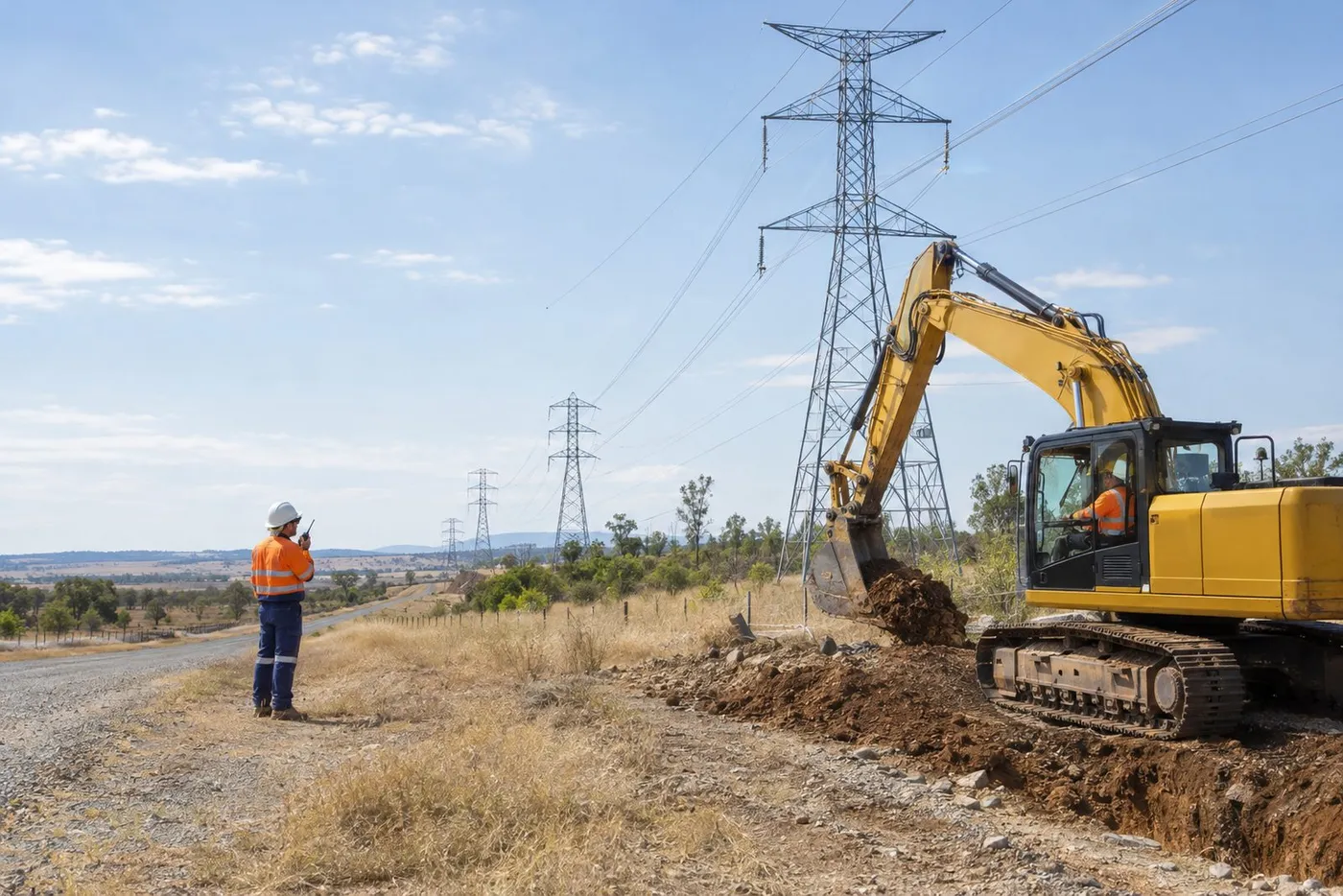
Spotting near overhead powerlines
Each state sets approach distances for people and plant working near overhead electric lines, and many require a dedicated spotter once plant can enter the zone around the line. Network operators often add their own conditions. Service Spotters supplies spotters who hold the relevant state electrical spotter training, set up the exclusion zone with the crew and stay on the task for as long as the risk exists.
Excavation near buried services
Before You Dig Australia plans and locator marks tell you where services should be. A spotter watches the bucket or vacuum head, calls a stop when the ground changes and records any exposed or unmarked service, so a near miss does not become a cut cable or a gas strike.
Dedicated to the hazard
A spotter's job is to watch the hazard and warn the operator. Service Spotters people are dedicated to that role for the whole time the risk exists, and every shift, clearance check, warning and stop work call is logged in the field.
When to call Service Spotters
- Plant could come closer to overhead lines than your state's approach distances allow.
- Excavation is happening near gas, water, power, fibre or other buried services.
- Cranes, reversing plant or pedestrians share a tight work front.
- Confined space, working at heights or hot works need a dedicated standby person.