

The general biosecurity obligation
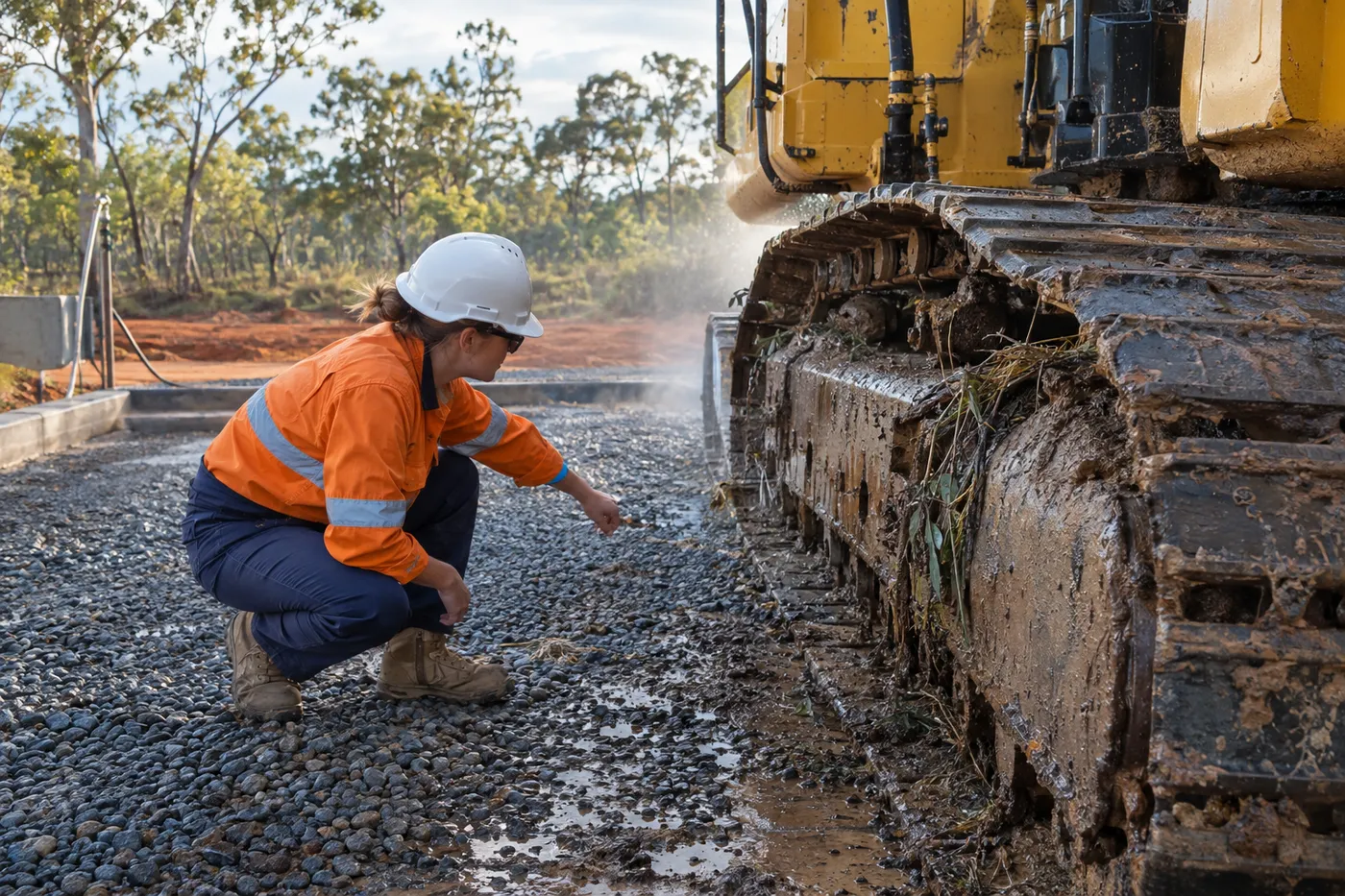
State biosecurity laws expect anyone dealing with a biosecurity matter, including weeds, pest animals and soil carried on machinery, to take reasonable and practical steps to stop it spreading. On a project that usually means hygiene inspections for plant coming to site, controlled washdowns before plant leaves, weed mapping along the footprint and a record that shows the steps were taken.
Vehicle and plant hygiene
Biosecurity Spotters inspects vehicles and plant against the site's hygiene requirements, supervises washdown bays and issues an inspection record or weed hygiene declaration for each item. Inspections can happen at the supplier's yard before mobilisation, at the site gate or at a dedicated washdown pad, so dirty plant is caught before it becomes a problem.
Weeds and pest animals
Weed technicians map declared and environmental weeds, treat infestations along corridors and in rehabilitation areas and come back for follow-up rounds. Licensed pest controllers run feral pig, wild dog, fox, cat and rabbit programs with camera trap monitoring, so landholders and regulators can see what was done and what changed.
When to call Biosecurity Spotters
- Plant and vehicles are arriving from other regions or leaving a weed-affected area.
- Declared or restricted weeds are present on the site or access tracks.
- Pest animals are damaging rehabilitation, fencing or stock.
- Your project approval or landholder agreement sets hygiene and weed conditions.